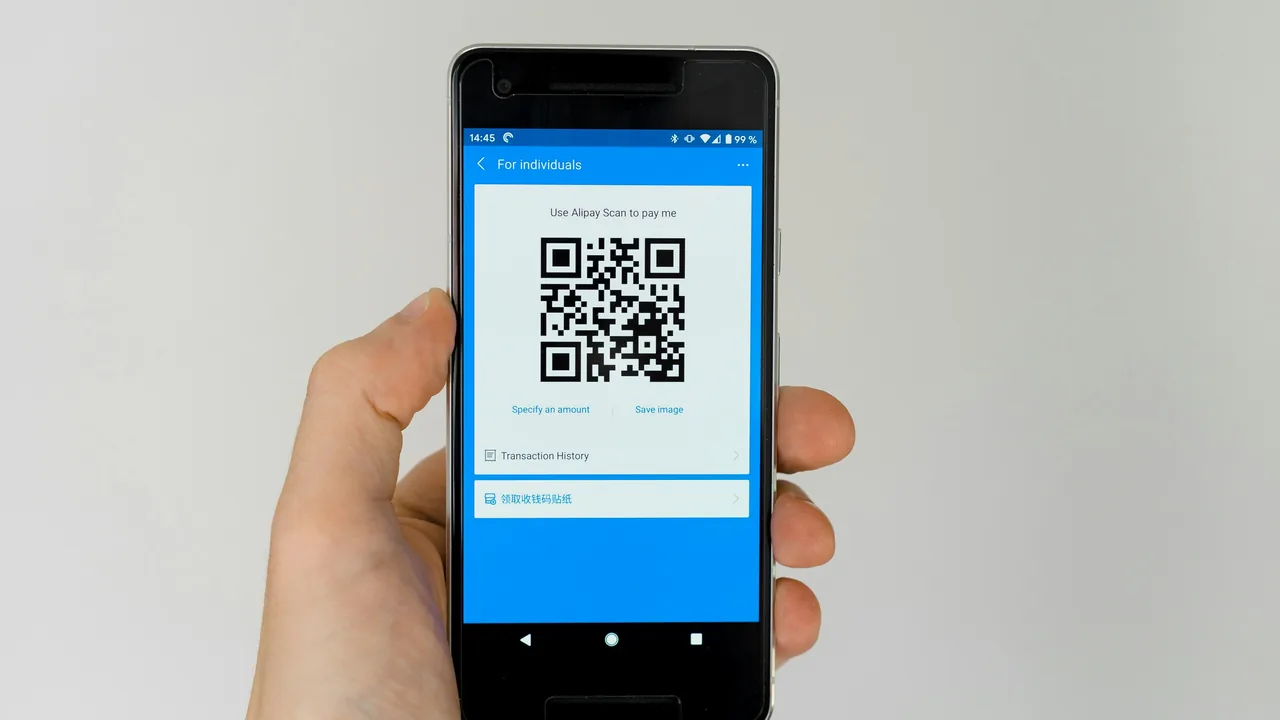
Dynamic vs Static QR: The Cost That Actually Matters
Ask most people the difference between static and dynamic QR codes and they'll say "one lets you track scans." That's true, but it misses the deeper trade-off. The cost that actually matters isn't the price of a subscription — it's the cost of being stuck with a URL you can't change after you've printed it on something expensive.
This guide breaks down static vs dynamic QR, the real decision, and when each is the obvious right answer.
Static QR codes
A static QR code encodes the destination URL directly in the pattern. Scan it and the phone goes straight to that URL.
Pros:
- Free — generate one anywhere, no account needed.
- No dependency — it works forever, regardless of any platform.
- Faster to scan (slightly, since less data in some cases).
Cons:
- Can't change the destination. Once printed, the URL is fixed.
- No scan analytics. You can't measure how often it's scanned.
- Redoing is costly. If the URL changes, you must reprint the code.
Dynamic QR codes
A dynamic QR code encodes a short link (a pointer) rather than the final URL. Scanning it goes to the short link, which redirects to the current destination.
Pros:
- Re-targetable — change the destination anytime without reprinting.
- Measurable — you can count scans, time, device, and location.
- Campaign-friendly — point it at a landing page, then repoint it later.
Cons:
- Needs a platform — you need a short-link/QR service (which may cost money).
- Dependency — if the service or short link dies, the QR stops working.
- Slightly more data — but the scan-time difference is negligible in practice.
The cost that actually matters
Here's the decision framework that matters: how expensive is it to be wrong?
- If the QR is on a business card, product label, packaging, or a printed brochure — something costly or time-consuming to reprint — then a URL change means reprinting everything. Dynamic is worth it because it lets you change the destination without touching the print.
- If the QR is on a digital asset (a website, a slide, an email) where you can easily regenerate it, and the URL is stable, then static is fine and free.
So the question isn't "do I want analytics?" — it's "what happens if this URL changes?" If the answer is "I'd have to reprint," go dynamic.
Analytics as the second reason
Beyond re-targeting, dynamic QR gives you scan data: how many scans, when, what device, roughly where. That's genuinely useful for campaigns and print measurement. If you need to prove ROI on a billboard or a poster, dynamic QR's scan data is how you do it.
But if you don't need that and the URL is stable, don't pay for a feature you won't use.
A decision helper
| Situation | Choose |
|---|---|
| Permanent URL, digital placement | Static |
| Permanent URL, physical reprint is cheap | Static |
| URL may change, reprint is costly | Dynamic |
| Need scan analytics / campaign ROI | Dynamic |
| Just want a code, no account | Static |
The takeaway
Static and dynamic QR aren't about "free vs paid" — they're about flexibility and measurement vs simplicity and independence. Choose dynamic when you need to re-target or measure and the placement is expensive to redo; choose static when the URL is stable and you want zero dependency.
If you go dynamic, make sure the short link behind it is validated and safe (see the QR security guide), and design the code to scan reliably (QR print design).
Counting the real costs
The cost comparison between static and dynamic QR is not just per-code pricing — it is the full lifecycle cost, and that is where dynamic often wins. The static code's visible cost is near zero, but its hidden costs appear the moment the destination changes: every reprint, every re-placement, every campaign update. Print is expensive and slow, and a code that must be re-printed because its URL changed has quietly cost far more than the dynamic option's per-code fee. When you total printing, labor, and lost time across a campaign that evolves, the dynamic code's recurring cost is frequently the cheaper whole.
The value of not reprinting
The most undercounted benefit of a dynamic QR is the ability to change the destination without touching the printed artifact. A menu updates, an offer expires, a booking flow moves — with a dynamic code you edit the short link once and every printed code immediately points at the new destination. Reprinting even a small batch of flyers, posters, or packaging costs far more than the dynamic code. The dynamic vs static comparison makes this the deciding factor, and it is why dynamic codes are the default for anything with a shelf life.
The value of measurement
Dynamic codes also earn their cost through measurement. Because the click passes through a short link, the platform records scans, sources, devices, and timing. That data lets you answer which placements perform and which campaigns deliver — information a static code simply cannot produce, because a static code never touches tracking infrastructure. For any business decision backed by numbers, the measurement alone often justifies the dynamic choice. When you stack editability and measurement against a small per-code cost, the dynamic option usually wins on lifecycle economics even though it loses on the initial sticker price.
When static remains the cheaper answer
Static codes are still the right call in a narrow but real set of cases: a permanent destination that will never change, in a place that will not be reprinted, where you need no scan data. A one-off permanent link on a stable surface needs no tracking layer. The honest rule remains: if you may ever update the destination or want scan analytics, pay for dynamic; if the destination is truly permanent and you need no data, static is simpler and cheaper. The decision is about your future need to edit and measure, not about the initial price tag alone.